
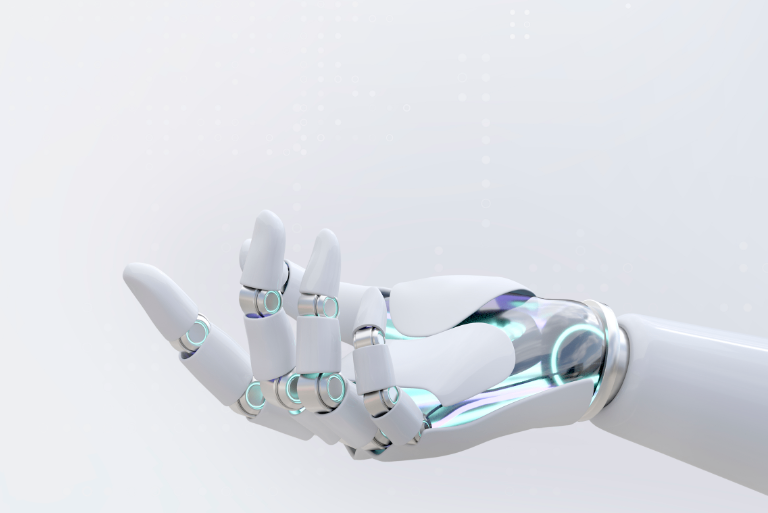
In today’s ever-evolving digital landscape, the integration of artificial intelligence (AI) into marketing strategies has become a pivotal force, revolutionising the way businesses engage with their audience.
As an experienced marketer, I’ve witnessed the transformative power of AI and its impact on marketing first-hand.
In this article, I will delve into the fundamental aspects of AI in marketing, explore the innovative tools and strategies it offers, and shed light on the future of AI-driven marketing.
Understanding AI in Marketing
Understanding the essence of AI in marketing is crucial for embracing its potential.
AI encompasses the use of advanced algorithms and data processing to simulate human intelligence, enabling machines to execute tasks that traditionally required human intervention.
In the context of marketing, AI empowers businesses to gain deeper insights into consumer behaviour, automate repetitive tasks, and deliver personalised experiences at scale.
This amalgamation of data analysis and automation presents unprecedented opportunities for marketers to enhance their strategies, drive efficiency, and foster meaningful connections with their target audience.
AI has irrevocably altered the marketing landscape by providing a wealth of capabilities that were previously unattainable.
From predictive analytics to natural language processing, AI equips marketers with the tools to comprehend complex data sets, predict future trends, and understand customer sentiments.
By harnessing the power of AI, marketing professionals can streamline their processes, identify patterns in consumer behaviour, and tailor their campaigns with precision, ultimately leading to improved ROI and customer satisfaction.
The synergy between AI and marketing is evident in the seamless integration of AI-powered tools into marketing operations.
These tools encompass a wide array of functionalities, including but not limited to, predictive analytics, customer segmentation, and content personalisation.
By leveraging these tools, marketers can optimise their campaigns, refine their targeting strategies, and deliver hyper-personalised content that resonates with their audience on a profound level.
The Role of AI in Revolutionising Marketing
The role of AI in revolutionising marketing cannot be overstated.
AI serves as a catalyst for innovation, enabling marketers to transcend traditional boundaries and unlock new realms of possibility.
Through machine learning algorithms, AI empowers marketers to decipher intricate patterns within consumer data, facilitating the creation of highly targeted and effective marketing campaigns.
Moreover, AI-driven insights enable businesses to adapt swiftly to dynamic market trends, ensuring that their strategies remain agile and responsive in an ever-changing landscape.
The advent of AI has redefined the concept of customer engagement, ushering in an era of hyper-personalisation and real-time interactions.
AI-powered chatbots, for instance, have emerged as a strategic tool for marketing automation, offering businesses the ability to engage with their audience round the clock, deliver personalised recommendations, and address customer queries with unparalleled efficiency.
This seamless integration of AI not only enhances the customer experience but also empowers businesses to streamline their operations and drive continuous improvement in their marketing efforts.
Furthermore, AI augments the decision-making process for marketers by providing invaluable insights derived from vast datasets.
By analysing consumer behaviour and preferences, AI equips marketers with the foresight to anticipate market trends, tailor their messaging, and refine their targeting strategies. This proactive approach enables businesses to stay ahead of the curve, adapt to evolving consumer needs, and maintain a competitive edge in the market.
Leveraging AI Marketing Tools for Success
Leveraging AI marketing tools is paramount for achieving success in today’s dynamic marketing landscape.
These tools encompass a diverse array of functionalities, each designed to streamline processes, enhance decision-making, and drive impactful outcomes.
From predictive analytics platforms to AI-powered content creation tools, the arsenal of AI marketing tools offers unparalleled capabilities that empower marketers to elevate their strategies and deliver compelling experiences to their audience.
One of the key benefits of AI marketing tools lies in their ability to automate repetitive tasks, thereby freeing up valuable time for marketers to focus on strategic initiatives.
By harnessing automation, marketers can optimise their workflows, ensure consistency in their messaging, and allocate resources more efficiently, ultimately leading to increased productivity and cost savings.
Additionally, AI tools enable marketers to glean actionable insights from vast datasets, empowering them to make informed decisions and refine their strategies with precision.
Furthermore, AI marketing tools play a pivotal role in driving personalisation at scale.
By leveraging advanced algorithms, marketers can segment their audience based on intricate criteria, deliver tailored content recommendations, and create bespoke experiences that resonate with individual consumers.
This level of personalisation fosters deeper connections with the audience, engenders brand loyalty, and ultimately drives long-term value for businesses.
The seamless integration of AI marketing tools into the marketing stack equips businesses with the means to adapt to dynamic market conditions, deliver relevant content, and drive meaningful engagement with their audience.
Chatbots: A Strategic Tool for Marketing Automation and AI
Chatbots have emerged as a strategic tool for marketing automation and AI, (you’ve heard of Chat GPT, right? revolutionising the way businesses engage with their audience and deliver seamless customer experiences.
These AI-powered virtual assistants are capable of handling a myriad of customer interactions, ranging from answering queries to processing transactions, all in real-time.
The integration of chatbots into marketing strategies empowers businesses to provide round-the-clock support, personalise interactions, and drive customer satisfaction, all while optimising operational efficiency.
The allure of chatbots lies in their ability to deliver instant responses and tailored recommendations, thereby enhancing the overall customer experience.
By leveraging natural language processing and machine learning algorithms, chatbots can comprehend and respond to customer queries with remarkable accuracy, mimicking human-like interactions and fostering a sense of conversational engagement.
This humanisation of interactions not only enhances the brand-customer relationship but also instils confidence in consumers, leading to increased trust and loyalty towards the business.
Moreover, chatbots serve as a valuable asset for lead generation and customer acquisition.
By initiating proactive conversations, qualifying leads, and guiding prospects through the sales funnel, chatbots contribute to the seamless progression of potential customers towards conversion.
This proactive approach not only augments the efficiency of marketing efforts but also ensures that businesses maximise their opportunities for engagement and conversion, ultimately driving tangible results and ROI.
Implementing AI in Marketing Strategies
Implementing AI in marketing strategies necessitates a comprehensive understanding of the underlying mechanisms and strategic considerations.
The integration of AI into marketing initiatives requires a phased approach, encompassing the identification of key areas for AI implementation, the selection of appropriate AI tools, and the formulation of a cohesive strategy that aligns with business objectives.
By following a structured implementation roadmap, businesses can maximise the potential of AI and unlock its transformative power in their marketing endeavours.
A crucial aspect of implementing AI in marketing strategies is the alignment of AI capabilities with specific business goals.
Whether the objective is to enhance customer engagement, improve campaign performance, or drive operational efficiency, it is imperative to outline clear objectives that AI can help accomplish.
This strategic alignment ensures that AI is leveraged in a purposeful manner, driving tangible outcomes that contribute to the overarching business strategy.
Another pivotal consideration in implementing AI in marketing strategies is the integration of AI tools with existing marketing technologies and data sources.
Seamless integration enables businesses to harness the full potential of AI, derive actionable insights, and orchestrate cohesive marketing campaigns that deliver consistent and impactful experiences to the audience.
Moreover, the interoperability of AI with existing systems fosters a unified approach to data management, ensuring that insights derived from AI are integrated seamlessly into the marketing ecosystem.
Key Innovations in AI Marketing
The realm of AI marketing is replete with key innovations that have redefined the landscape and empowered marketers to achieve unprecedented levels of efficiency and effectiveness.
From predictive analytics to AI-driven content personalisation, these innovations have reshaped the way businesses approach marketing, enabling them to harness the power of AI to drive meaningful outcomes and deliver exceptional experiences to their audience.
Predictive analytics stands as a cornerstone of AI marketing innovations, offering businesses the ability to forecast consumer behaviour, identify trends, and anticipate market dynamics with precision.
By leveraging machine learning algorithms, businesses can derive actionable insights from historical data, enabling them to make informed decisions, refine their targeting strategies, and optimise their campaigns for maximum impact.
This proactive approach equips marketers with the foresight to adapt swiftly to evolving market dynamics, ensuring that their strategies remain agile and responsive to consumer needs.
Another notable innovation in AI marketing lies in the realm of AI-driven content personalisation.
Through advanced algorithms and natural language processing, businesses can tailor their content to align with individual preferences, interests, and behaviours, delivering bespoke experiences that resonate with their audience on a profound level.
This level of personalisation not only fosters deeper connections with consumers but also engenders brand loyalty, driving long-term value for businesses and nurturing enduring relationships with their audience.
How AI is Reshaping the Future of Marketing
The impact of AI on the future of marketing is profound, reshaping the way businesses engage with their audience, deliver experiences, and drive outcomes.
AI is poised to become increasingly integral to marketing strategies, offering unparalleled capabilities that enable businesses to navigate the complexities of the digital landscape and deliver compelling experiences that resonate with their audience.
One of the key ways in which AI is reshaping the future of marketing lies in its ability to drive hyper-personalisation at scale.
Through advanced algorithms and data processing, AI empowers businesses to segment their audience with precision, deliver tailored content recommendations, and create bespoke experiences that cater to individual preferences.
This heightened level of personalisation fosters deeper connections with the audience, driving engagement and brand loyalty, and ultimately positioning businesses for sustained success in the competitive market.
Moreover, AI is set to revolutionise the concept of customer engagement, ushering in an era of seamless, real-time interactions and proactive support.
AI-powered chatbots, in particular, are poised to play a pivotal role in transforming customer interactions, offering businesses the ability to deliver round-the-clock support, personalised recommendations, and instant responses to customer queries.
This seamless integration of AI not only enhances the customer experience but also empowers businesses to streamline their operations, drive efficiency, and foster enduring relationships with their audience.
Exploring the Potential of AI Marketing Bots
The potential of AI marketing bots extends far beyond their role as virtual assistants, encompassing a myriad of capabilities that have redefined the way businesses engage with their audience and drive marketing outcomes. AI marketing bots offer businesses the ability to automate customer interactions, deliver personalised recommendations, and glean actionable insights from consumer data, all while optimising operational efficiency and driving tangible results.
One of the key aspects of AI marketing bots lies in their ability to deliver personalised interactions and recommendations, thereby enhancing the overall customer experience. By leveraging natural language processing and machine learning algorithms, these bots can comprehend customer queries, tailor their responses, and deliver hyper-personalised recommendations that resonate with individual preferences and behaviours. This level of personalisation fosters deeper connections with the audience, driving engagement and brand loyalty, and ultimately positioning businesses for sustained success in the competitive market.
Furthermore, AI marketing bots serve as a valuable asset for lead generation and customer acquisition. By initiating proactive conversations, qualifying leads, and guiding prospects through the sales funnel, these bots contribute to the seamless progression of potential customers towards conversion. This proactive approach not only augments the efficiency of marketing efforts but also ensures that businesses maximise their opportunities for engagement and conversion, ultimately driving tangible results and ROI.
Top AI Tools for Marketing Success
Artificial Intelligence (AI) tools are transforming the marketing industry by providing deep consumer insights and automating tasks that were once time-consuming.
One of the top tools is AI-powered Customer Relationship Management (CRM) systems, like Salesforce Einstein, which help marketers predict customer behaviors and personalise communications.
Another is chatbots, such as Drift or Intercom, which use natural language processing to engage with customers in real-time, providing support and gathering data.
Sentiment analysis tools like Brandwatch analyse social media to gauge public opinion on products and brands.
Additionally, AI-driven content creation tools like OpenAI’s GPT-4 can generate creative text, enhancing content marketing efforts.
Personalisation engines, such as Dynamic Yield, use machine learning to tailor website experiences to individual users, increasing conversion rates.
Lastly, predictive analytics tools, like Google Analytics’ predictive features, leverage AI to forecast future trends and customer actions, allowing marketers to be proactive rather than reactive.
These tools are just the tip of the iceberg in a rapidly evolving landscape where AI is becoming an indispensable ally for marketers.
Conclusion: Embracing the Future of AI-Driven Marketing
In conclusion, the integration of AI into marketing strategies represents a paradigm shift that empowers businesses to navigate the complexities of the digital landscape, deliver compelling experiences, and drive meaningful outcomes.
From AI-powered chatbots to predictive analytics platforms, the innovative tools and strategies offered by AI have redefined the way businesses engage with their audience, offering unparalleled capabilities that drive efficiency, foster meaningful connections, and position businesses for sustained success in the competitive market.
As we embrace the future of AI-driven marketing, it is imperative for businesses to recognise the transformative potential of AI and leverage it to drive tangible results.
By harnessing the power of AI, businesses can gain deeper insights into consumer behaviour, automate repetitive tasks, and deliver personalised experiences at scale, ultimately driving improved ROI and customer satisfaction.
As AI continues to reshape the marketing landscape, businesses that embrace its potential and integrate it into their strategies will be poised for sustained success in an increasingly dynamic and competitive market.
Embracing AI-driven marketing is the key to staying ahead in today’s competitive landscape. Explore the potential of AI tools for marketing success and unlock new realms of possibility for your business.
Looking to take your business to the next level? Contact us today on 01903 255158 or email us at contact@rococodigital.co.uk.